The Bay Bridge After Dark: The Other Span's Quiet Claim
The Golden Gate gets the postcards. The San Francisco–Oakland Bay Bridge carries the region — and at night, lit across the water, it makes its own argument.
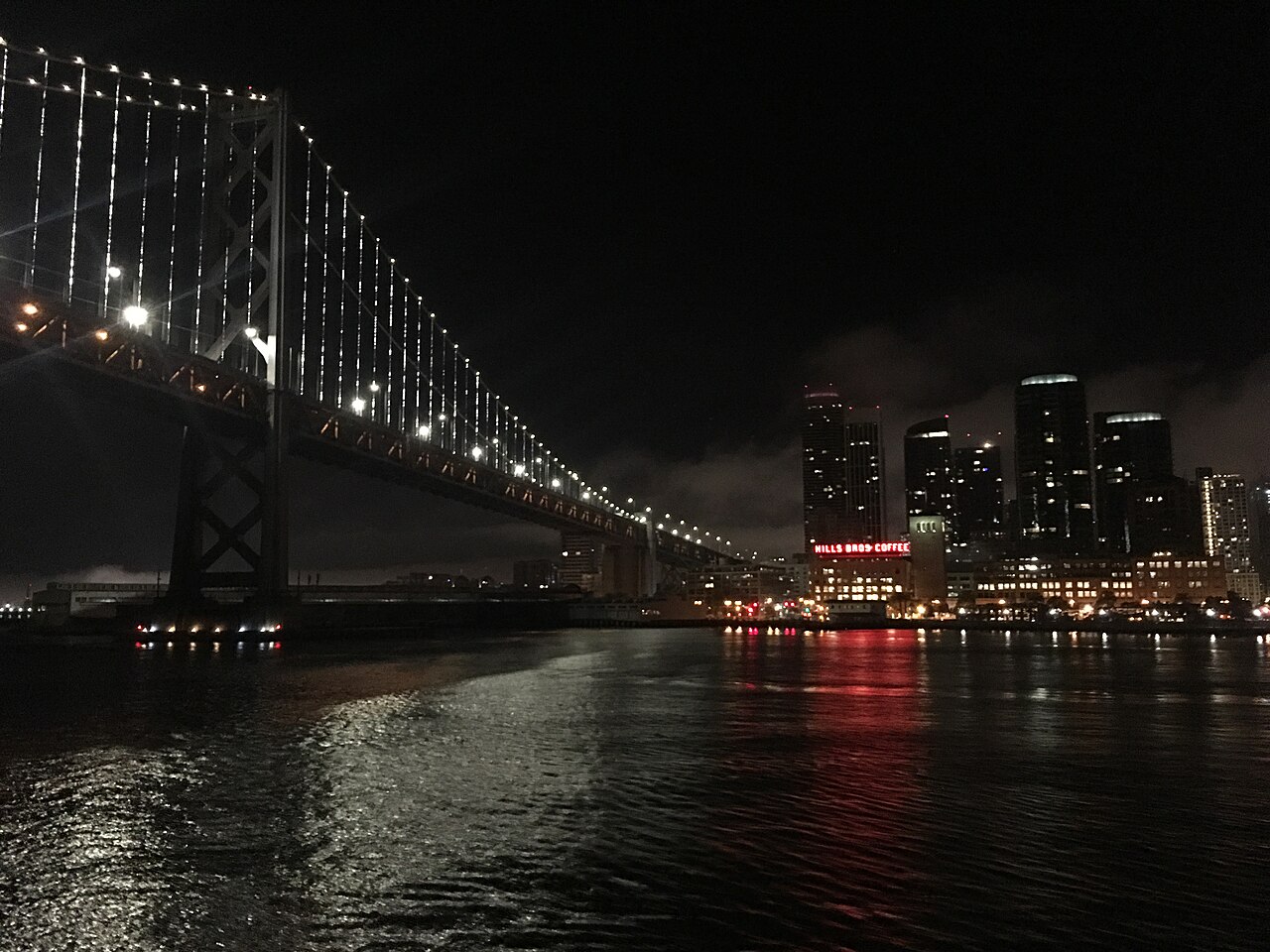
San Francisco has two great bridges, and only one of them got famous for looking good. The San Francisco–Oakland Bay Bridge — longer, older by months, and carrying Interstate 80's traffic between San Francisco, Yerba Buena Island and Oakland — is the region's working crossing, and at night, seen from the Embarcadero or Treasure Island, it is nobody's second place.
The bridge opened in 1936, half a year before the Golden Gate, a double-decker giant of its era. Its modern chapter was written after the 1989 Loma Prieta earthquake damaged the eastern span: the replacement — a self-anchored suspension span with a single sweeping tower — opened in 2013, giving the east side a landmark of its own and the old cantilever a retirement date.
The western span, between downtown and Yerba Buena, keeps its twin suspension silhouette, and the tunnel through the island still threads drivers between the two halves of the crossing. Together they carry one of the heaviest traffic loads in California — the daily tide of commuters between the East Bay and San Francisco that no transit map and no ferry schedule can fully replace.
At night the bridge changes register. The roadway lights draw a line across black water, the skyline gathers at the western anchorage, and the span that spends its days being infrastructure spends its evenings being scenery — the working bridge, off duty, looking like a postcard it never asked to be.
The Golden Gate can keep the fame. Ask an East Bay commuter at 7 a.m. which bridge matters, and then look at this one after dark. The Bay Bridge holds both answers.