International Orange: The Golden Gate Bridge as California's Front Door
It was supposed to be painted in stripes or plain aluminum. Instead the bridge got a color named for visibility — and became the most recognized span on Earth.
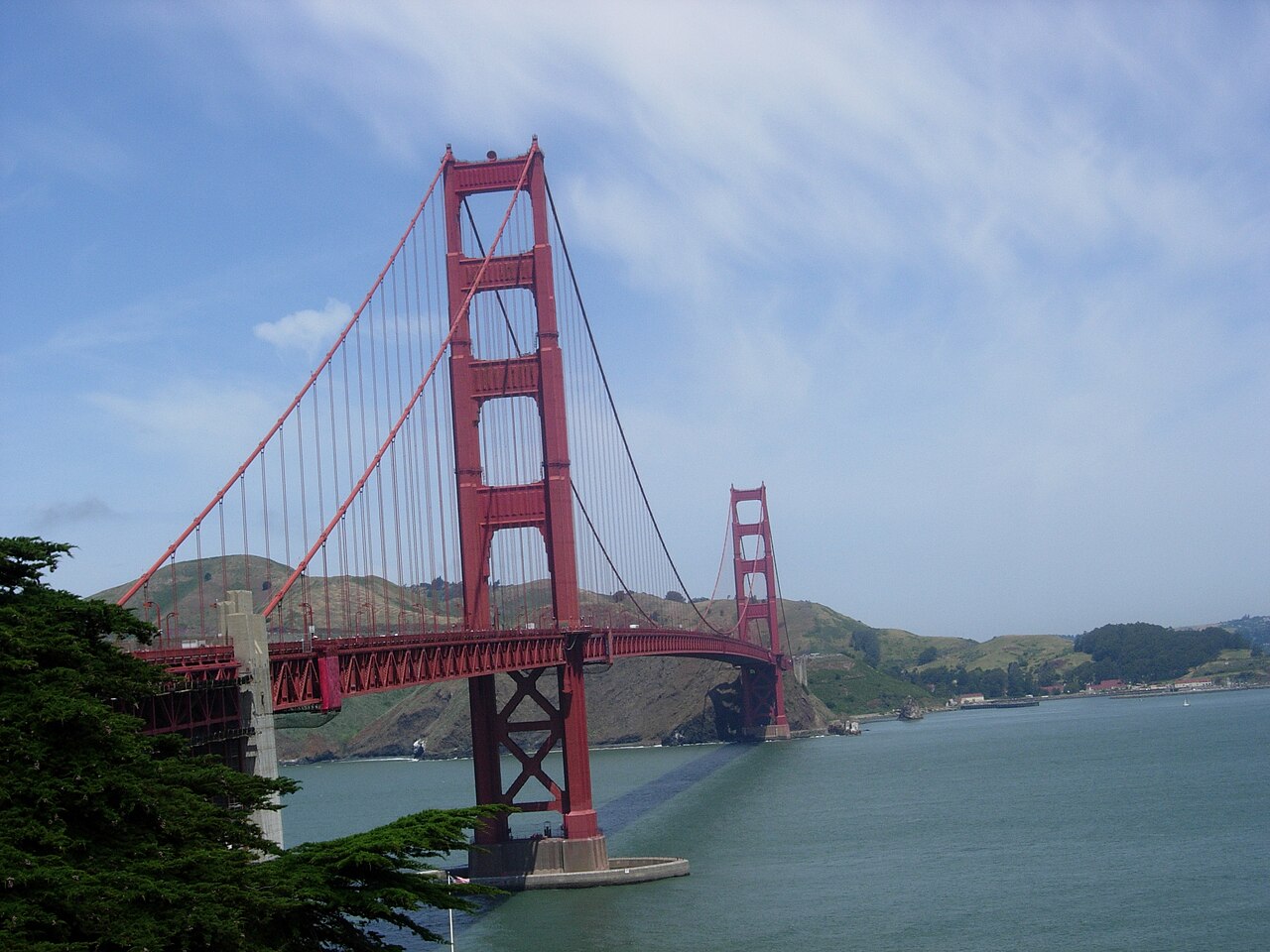
The color has a practical alibi. When the Golden Gate Bridge was being built in the 1930s, its steel arrived coated in a reddish-orange primer, and the architect liked what the fog did to it. The final paint — International Orange, a color used in the aerospace industry for visibility — stayed: a bridge meant to be seen, in the strait where fog is a permanent resident, wearing the exact shade that cuts through it.
The facts beneath the fame remain staggering: a main span that was the world's longest when it opened in 1937, towers rising 746 feet, cables spun from tens of thousands of miles of wire — and a pedestrian opening day when some 200,000 people walked the span before the first cars crossed. California built it through the Depression with district bonds, and it has been the state's front door ever since.
Today the bridge is infrastructure first: a U.S. 101 lifeline between San Francisco and Marin County run by the Golden Gate Bridge, Highway and Transportation District, carrying commuters, buses and the district's ferries-and-transit family, while painters work the span in a maintenance cycle that famously never ends — touch-up and repainting as a permanent condition, not a project with a finish line.
It is also, as every November visitor learns, a weather instrument. Watch the towers disappear from the top down and you are watching the marine layer arrive; watch the orange burn through at sunset and you are watching the city's favorite trick.
Plenty of bridges are longer now. None is more itself. The Golden Gate is California's handshake with the Pacific — offered in International Orange, visible for miles, fog permitting.